
Sheet metal
Cut. Punch. Bend. Connect.
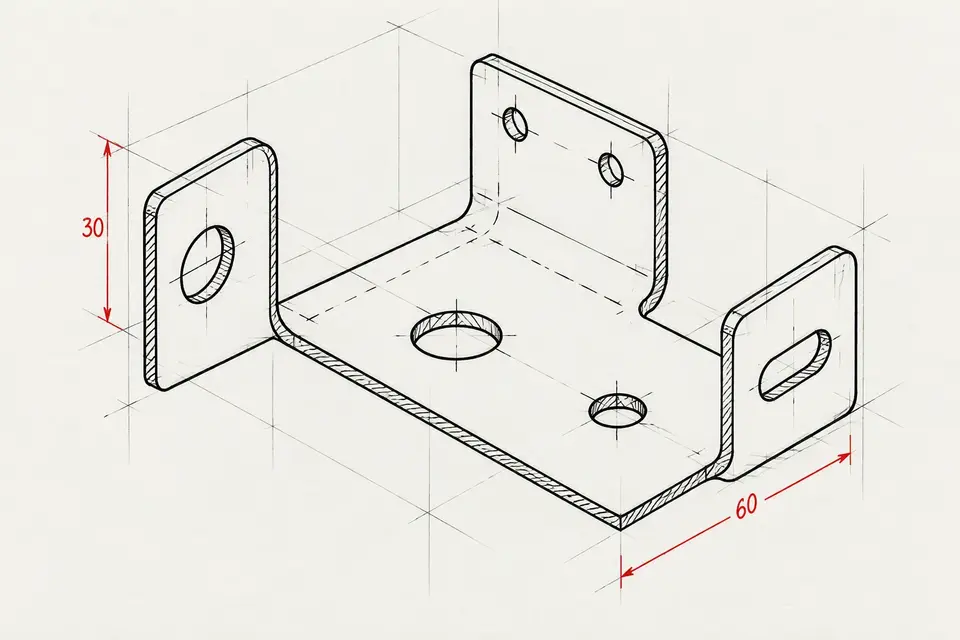
Illustrative component study; not a verified customer part.
Sheet-metal configurations, from a stand-alone laser cutter to robot-served bending lines.
From material to finished part.
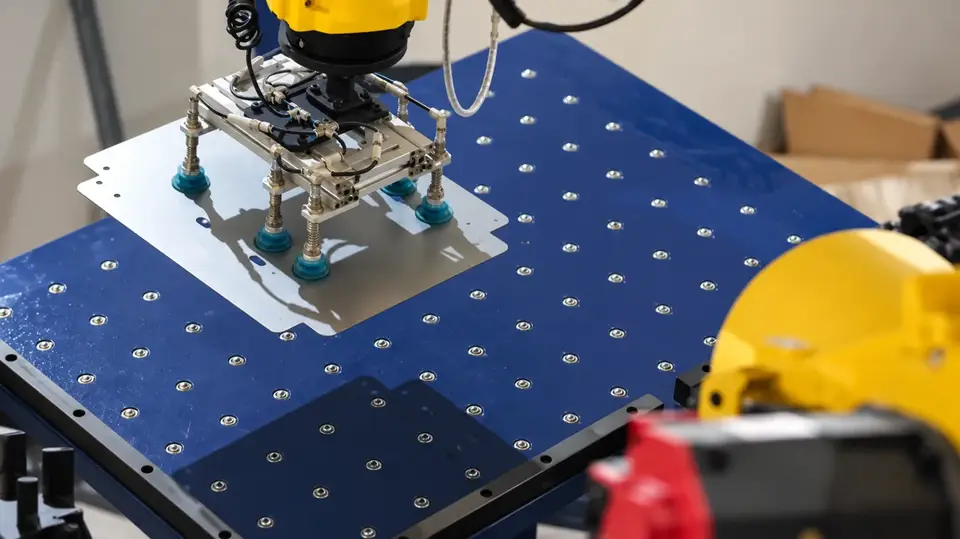
Material and blank preparation
Sheet and tube stock is staged by thickness and alloy before cutting begins. BL and GL fiber lasers nest parts automatically to raise material utilization, covering sheet formats from 3000×1500 mm up to 8000×2500 mm.
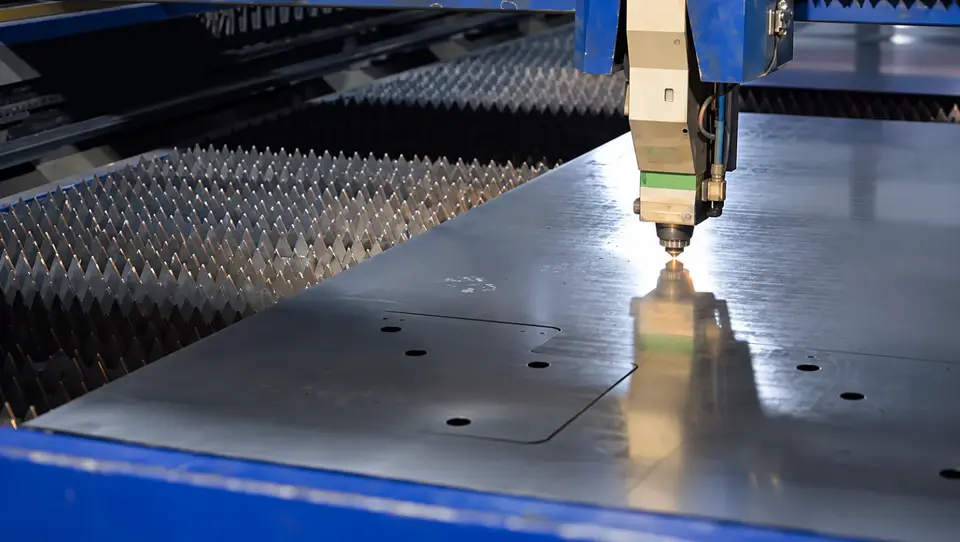
Laser cutting or punching
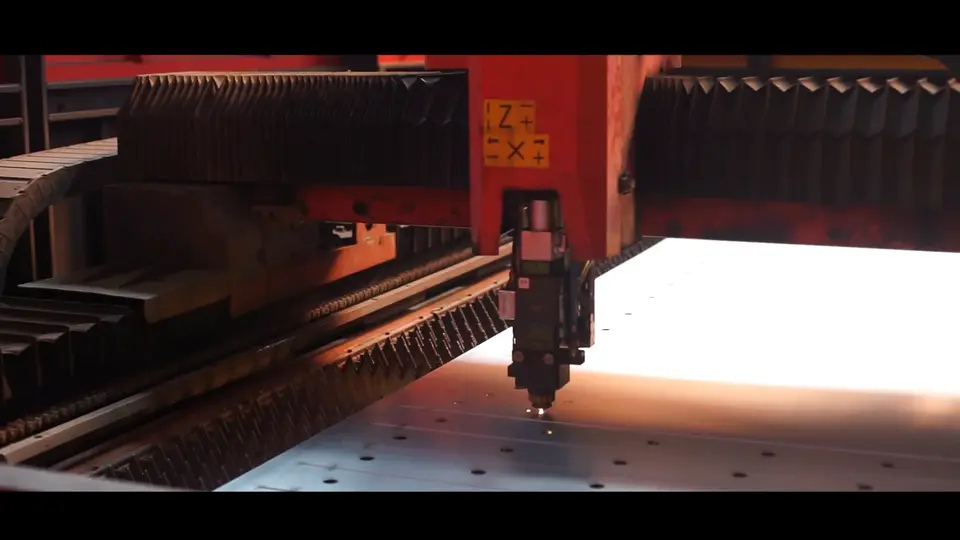
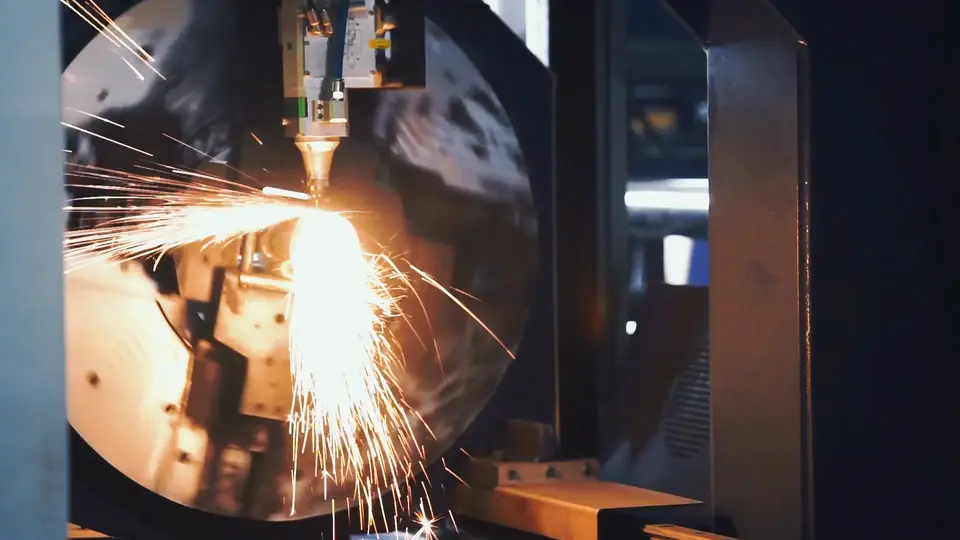
Fiber laser cutting with 1000–30000 W sources handles most contours, while PL pipe cutters process tube and EP turret punches remain the choice for hole-intensive or formed parts. Positioning accuracy of 0.02 mm/m on the cutting platform keeps downstream bending consistent.
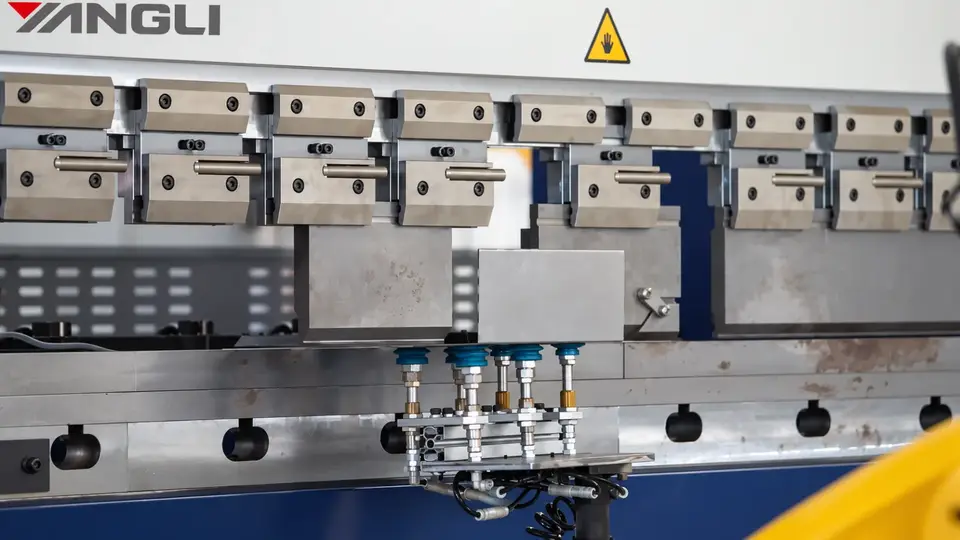
Bending sequence
The bending order is planned so later bends do not collide with tools or the machine frame. PB press brakes repeat angles with electro-hydraulic synchronization and mechanical crowning, and the FB multilateral bending center folds up and down automatically for hems, arcs and combined angles.
Handling and downstream operations
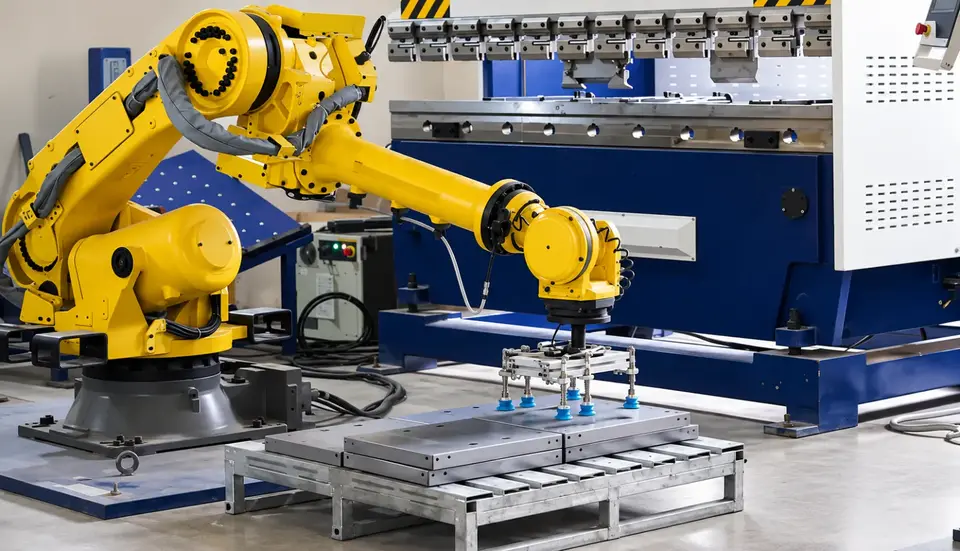
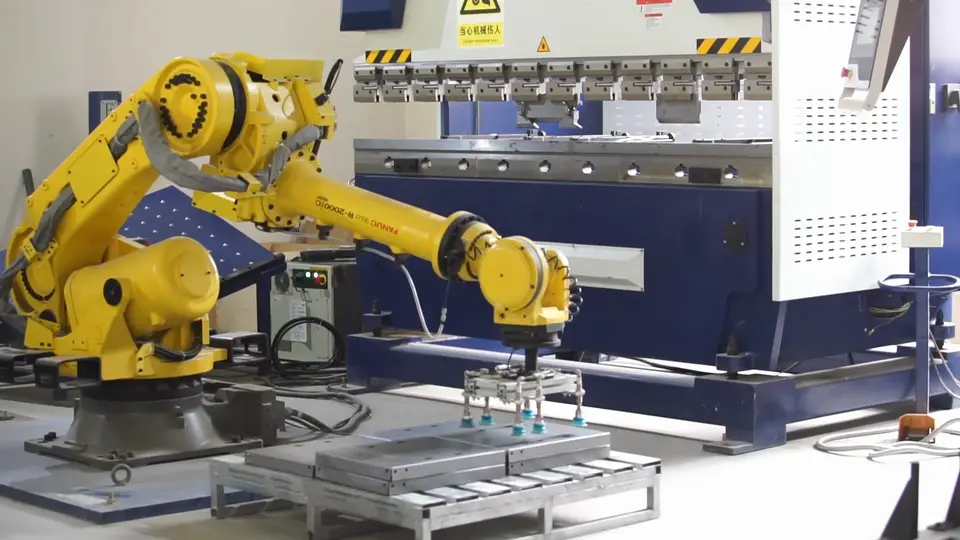
Cut and bent parts move between machines without manual carrying where volumes justify it. Robot bending cells such as the FMB-CI line load, re-grip and stack parts, linking cutting and bending into a continuous flow.
Sheet-metal production combines distinct operations. A laser, turret punch and press brake answer different geometry and process requirements; the product shape determines their relationship.
Review flat-pattern dimensions, material and thickness, bend lengths and tooling access. The catalog also distinguishes sheet, tube, coil and robotic laser cutting, so the material format should be established before comparing machines.
Four ways to build the line.
The part defines the architecture. Each route links to the equipment series that carries it.
Fiber laser cutting platform
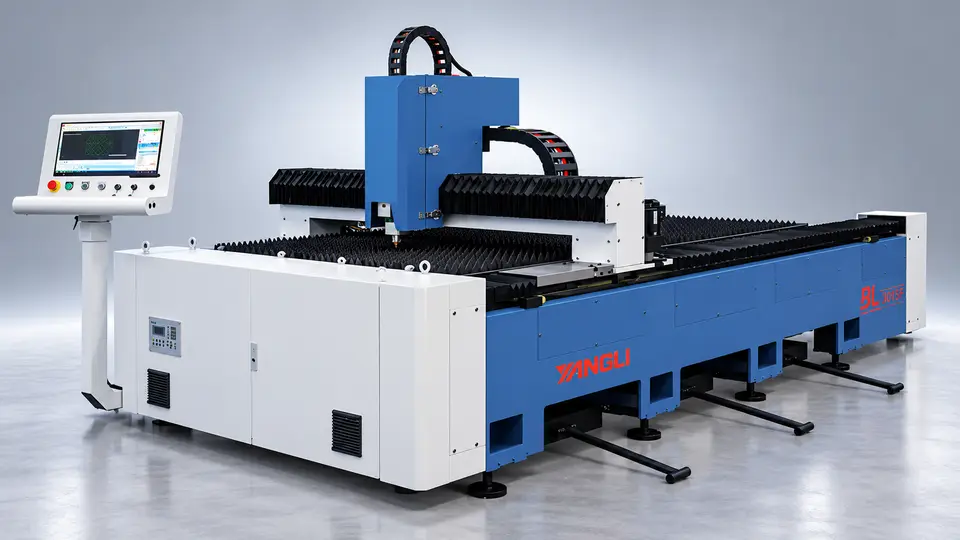
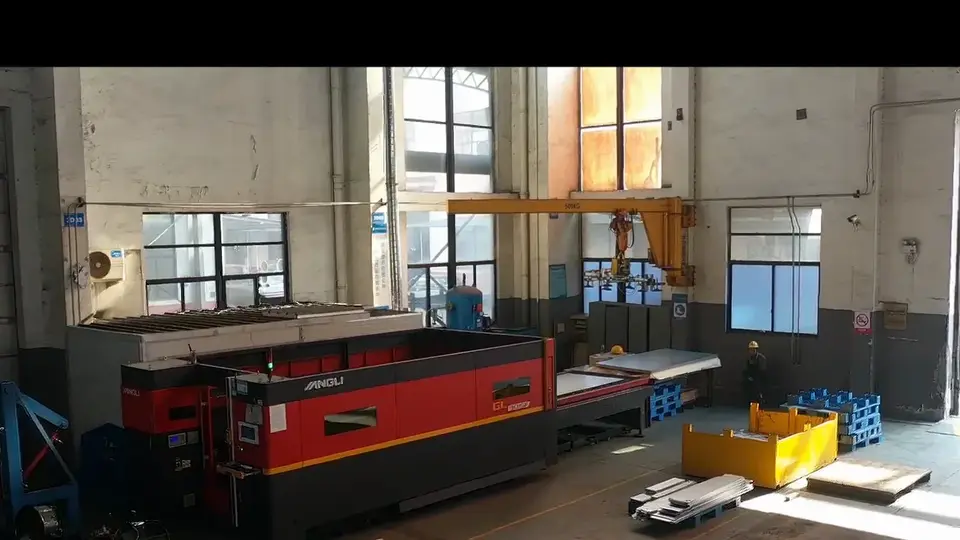
BL and GL gantry dual-drive fiber lasers cut sheet from 3000×1500 to 8000×2500 mm with 1000–30000 W sources and up to 120 m/min axis speed. Tube-and-sheet combo models and the PL pipe-cutting series extend the same platform to tube work.
BL ↗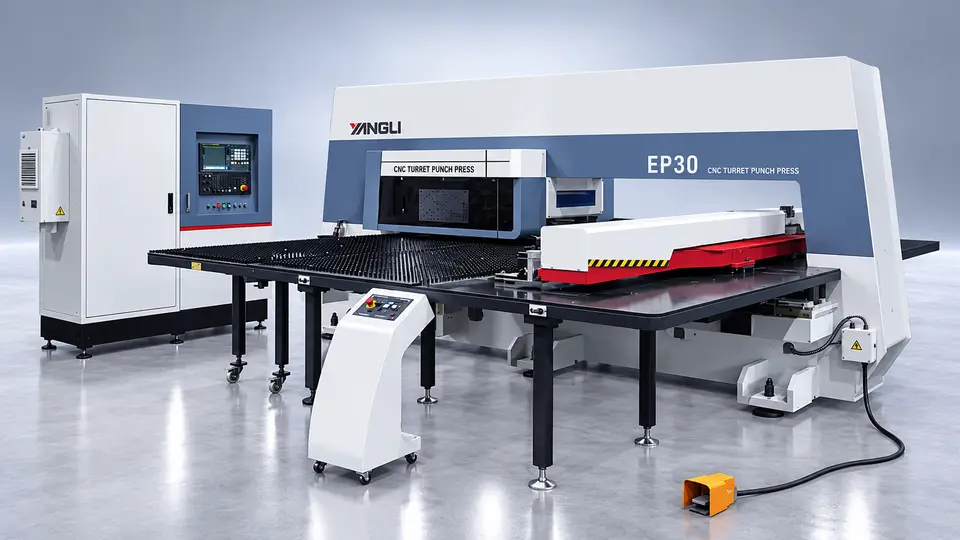
CNC turret punching and forming
EP series CNC turret punch presses produce hole patterns and formed features in one setup, complementing laser cutting for hole-intensive parts. The catalogue also lists an automated EP20 turret punch production line.
EP ↗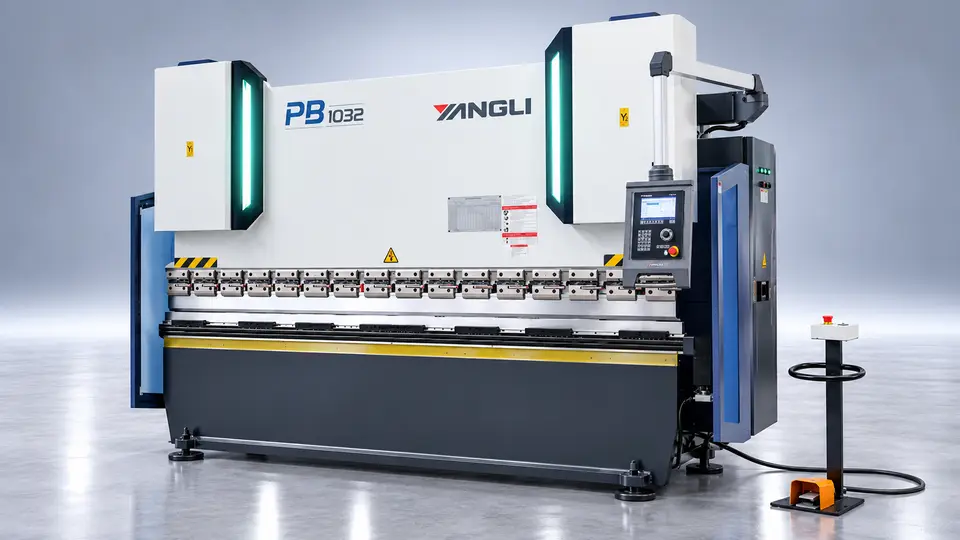
Synchronized CNC press brake
PB press brakes use electro-hydraulic servo valves and mechanical crowning to hold bend angles along the full table length. DELEM DA53T/DA58T/DA66T controls, multi-axis back gauges and tandem linkage scale the cell to long or heavy parts.
PB ↗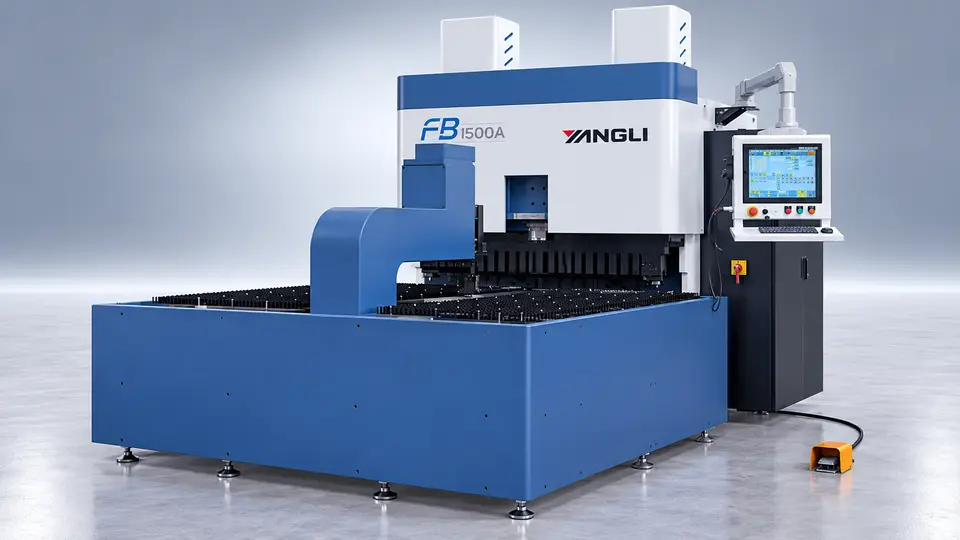
Multilateral bending center
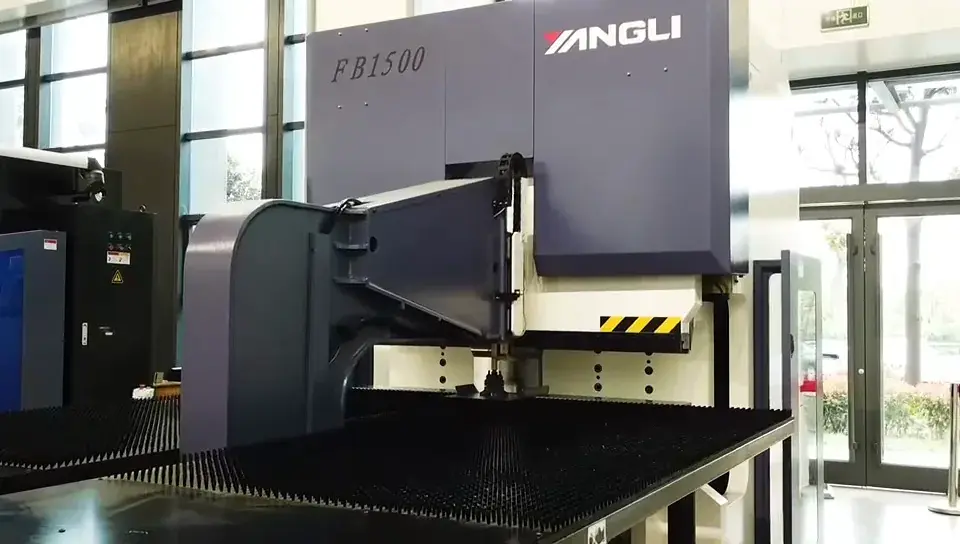
FB centers (FB1500A/FB2000A/FB2500A) fold panels up and down automatically, producing arcs, hems and negative-angle flattening for cabinet and enclosure work. Full-servo ball-screw drives eliminate hydraulic oil, and a PC-based Beckhoff EtherCAT control provides dedicated folding software functions.
FB ↗Proof on the floor.
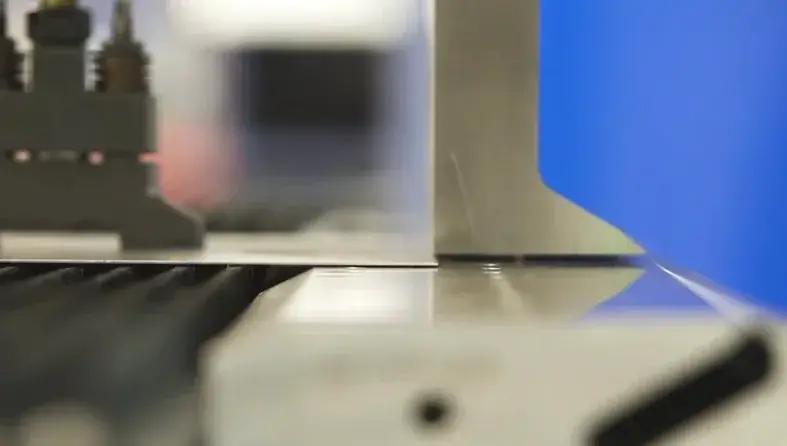
YANGLI sheet-metal machines and customer lines in operation.
What to bring to the discussion.
- 01Workpiece material and thickness
- 02Part geometry and tooling envelope
- 03Required operations and production target
- 04Feeding, transfer and automation interfaces
Bring your part. Define your process.
Share your drawing, material and production requirements. Start with a selected model or explore the equipment direction together.
Discuss your project ↗