04
Tandem press lines
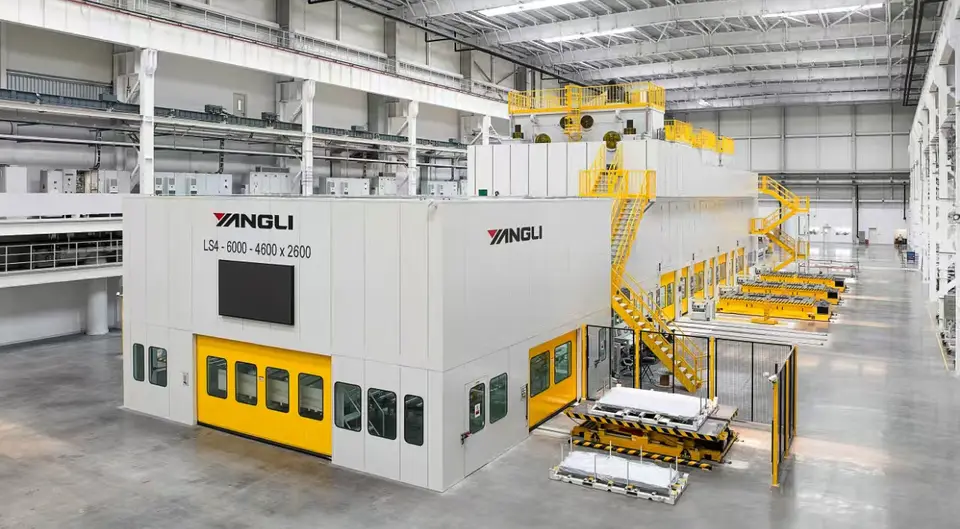
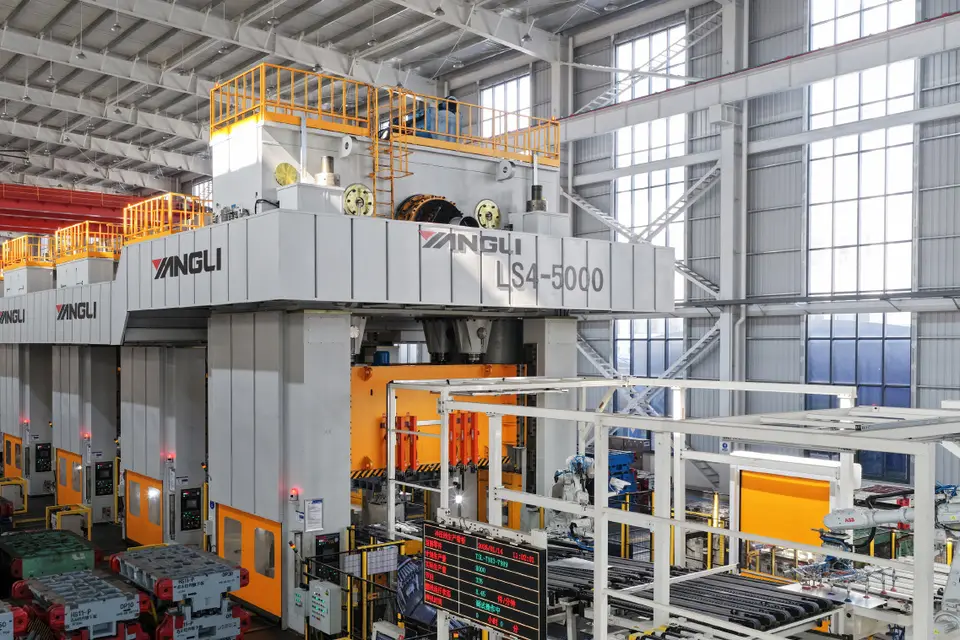
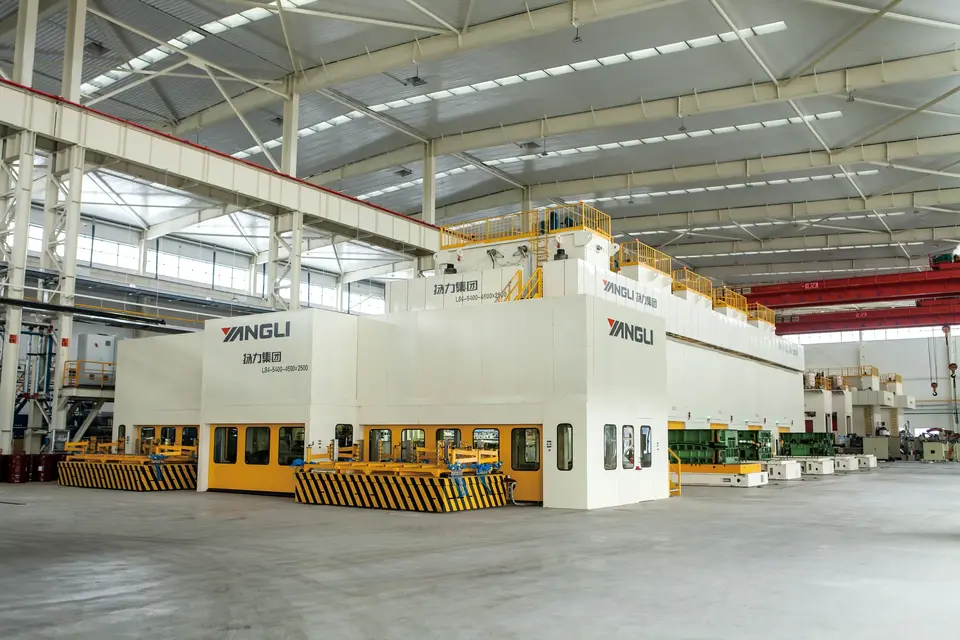
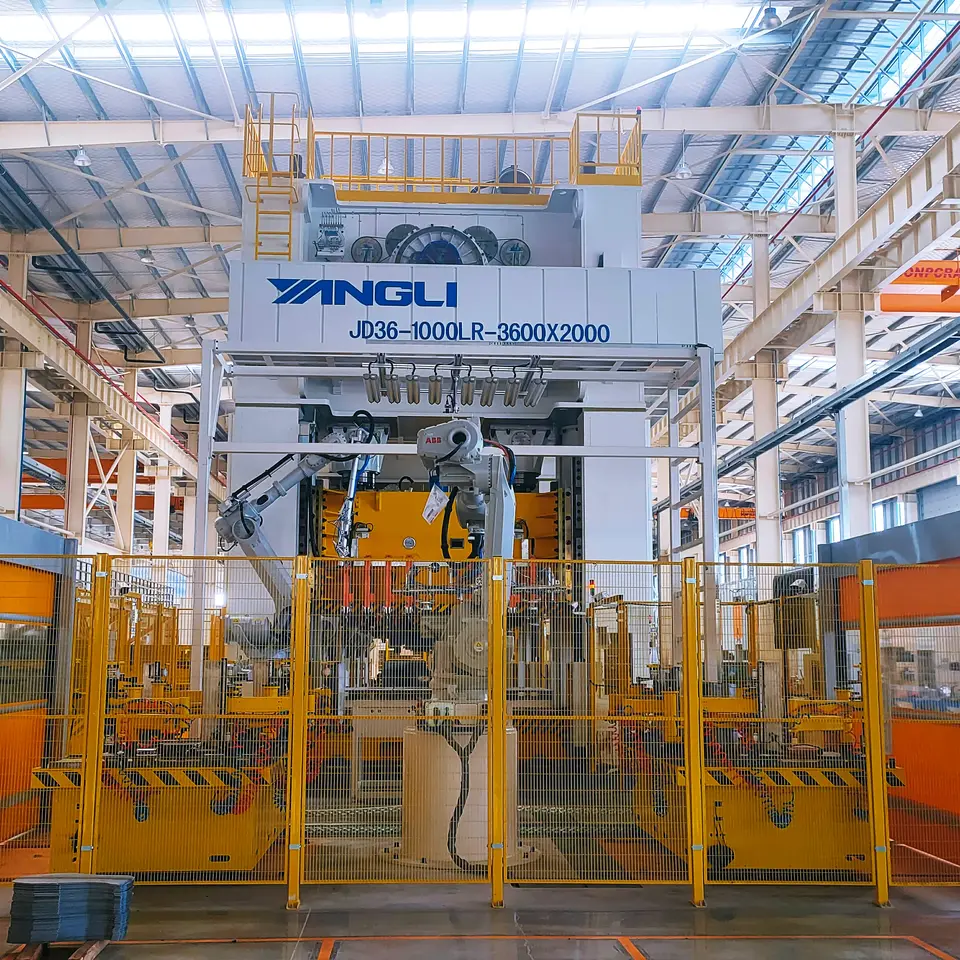
Several presses linked by robots or transfer units, from 3690 t suspension-arm lines to 7900 t tandem press lines.

From the component to the line.
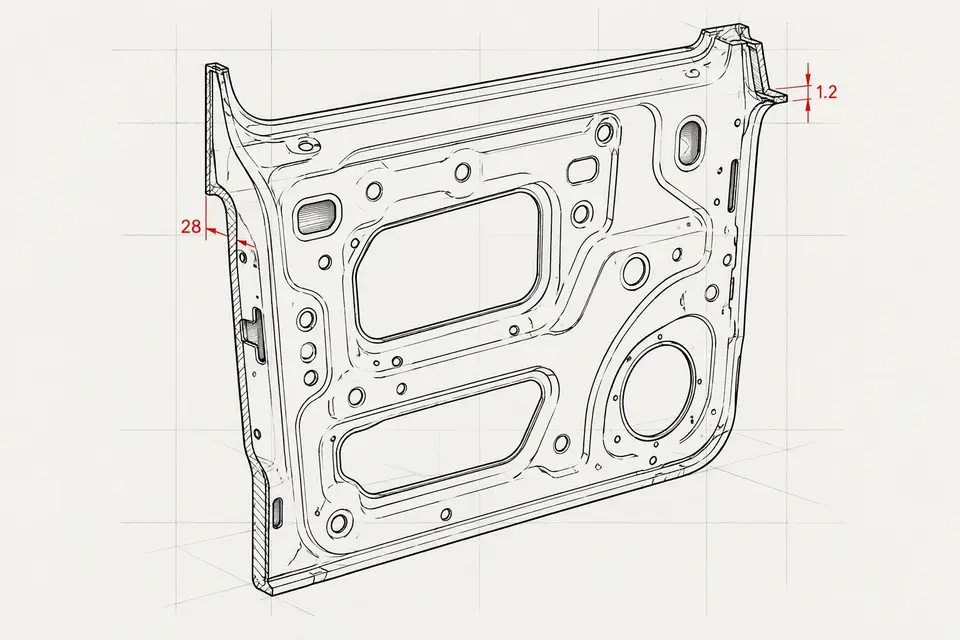
Illustrative component study; not a verified customer part.
Line configurations, from blanking to tandem press lines.
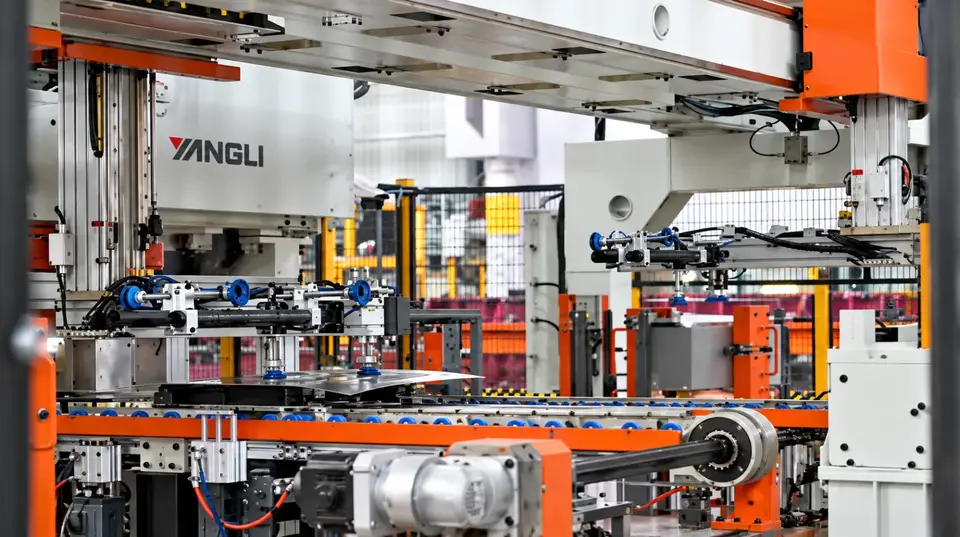
Coil or blank stock is cut, washed and staged. Blanking presses such as the BE-630 prepare the starting shape before any forming stroke.
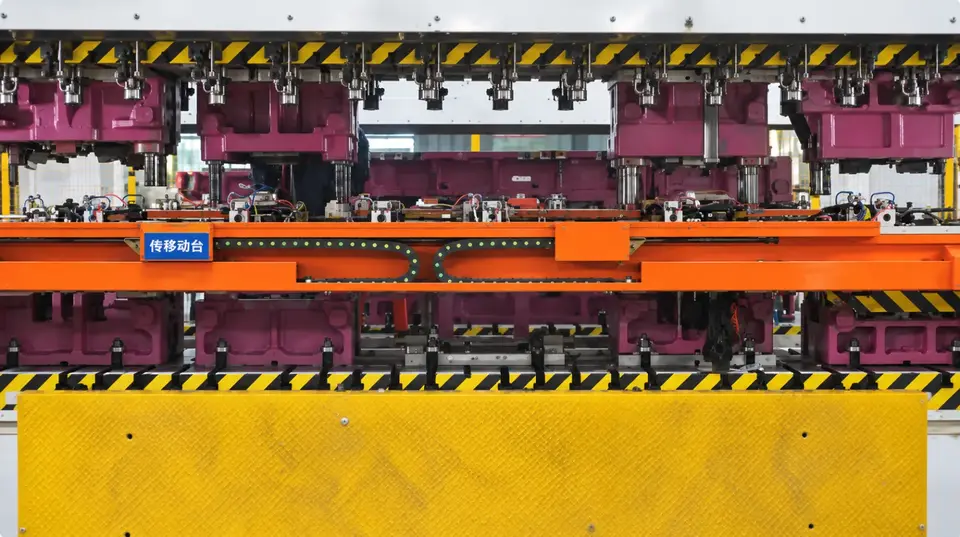
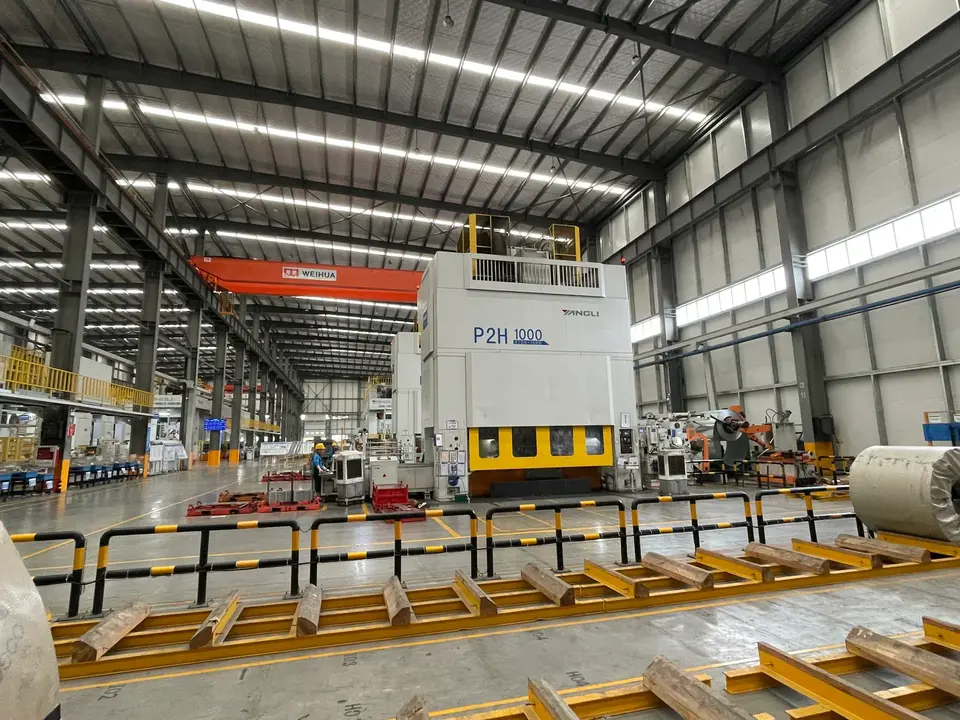
The part takes shape across drawing, trimming and flanging operations. Progressive dies on P2H presses run small parts at high volume; larger panels move to straight-side presses.
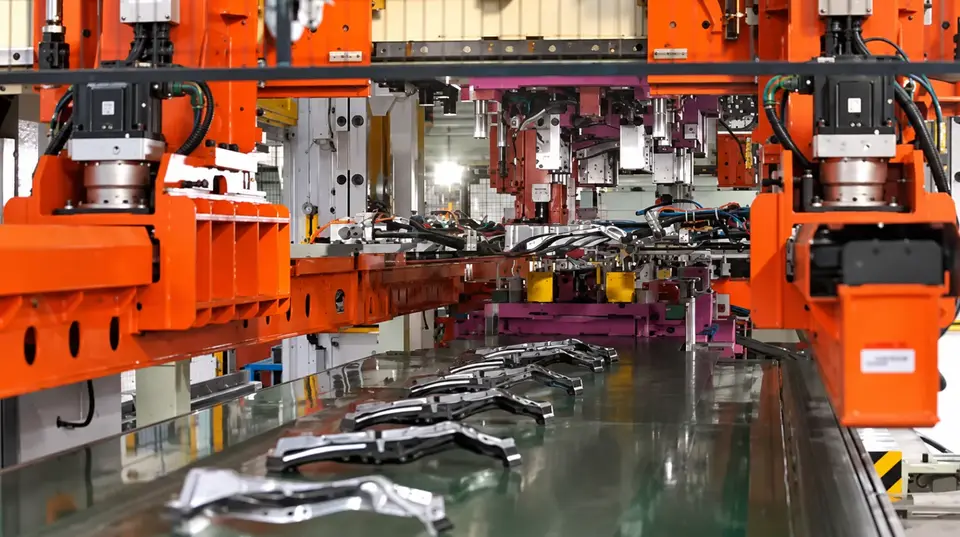
Between operations, robots or transfer units move the part without losing orientation. Transfer presses like the TE4 carry several stations inside one frame.
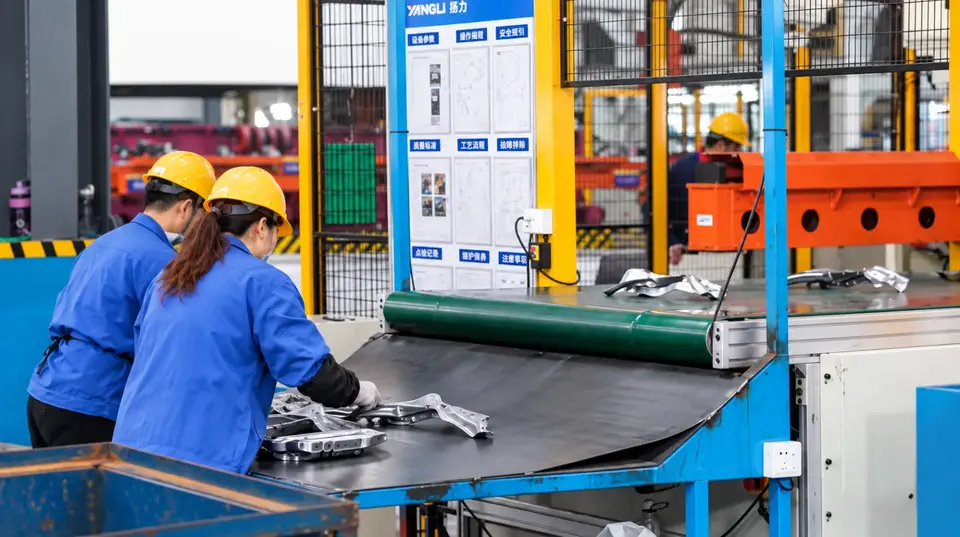
Finished stampings are racked, inspected and shipped to the body shop. Racking and handling are planned with the line, not after it.
A body panel, structural part and smaller stamped component place different demands on the tooling envelope and process sequence. Start with the part drawing, material and required operations.
The YANGLI catalog includes single-machine, transfer and line architectures. A proposed route must account for feeding, transfer, tooling access and downstream handling together. The component shown is an illustrative study, not a specific customer part.
The part defines the architecture. Each route links to the equipment series that carries it.
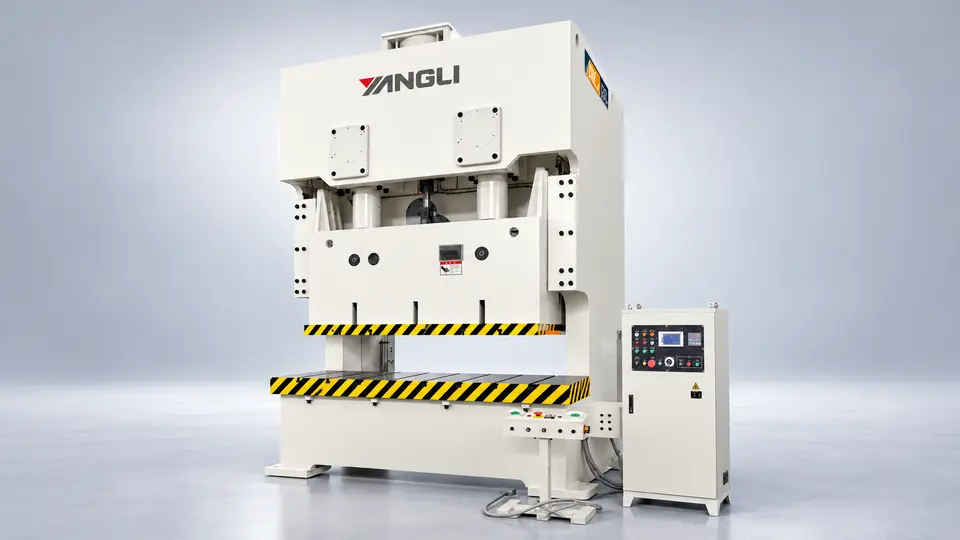
Two points across a wider working area for medium stampings, brackets and reinforcements, with open access around the tooling.
MC2 ↗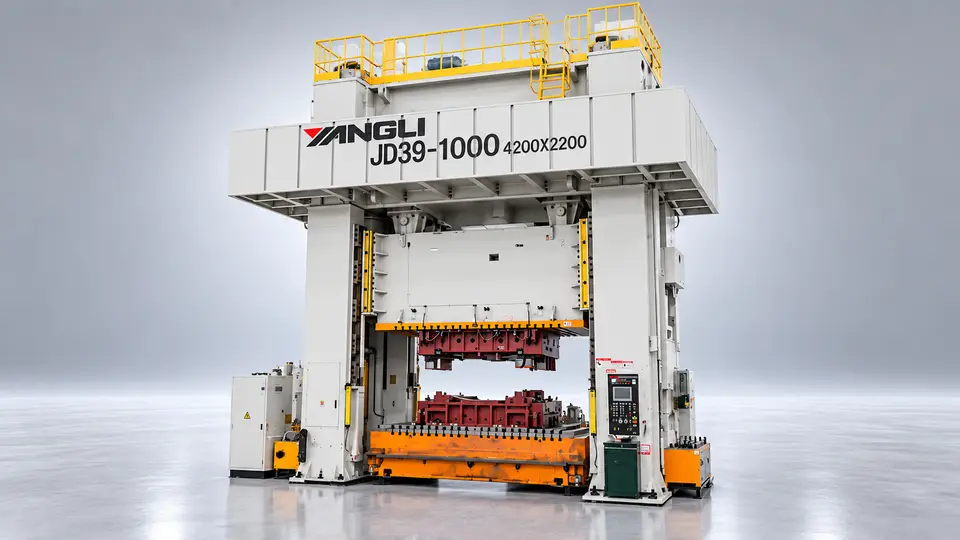
Four-point support for a large, rigid working area — structural parts and larger panels that need even force distribution.
J39 ↗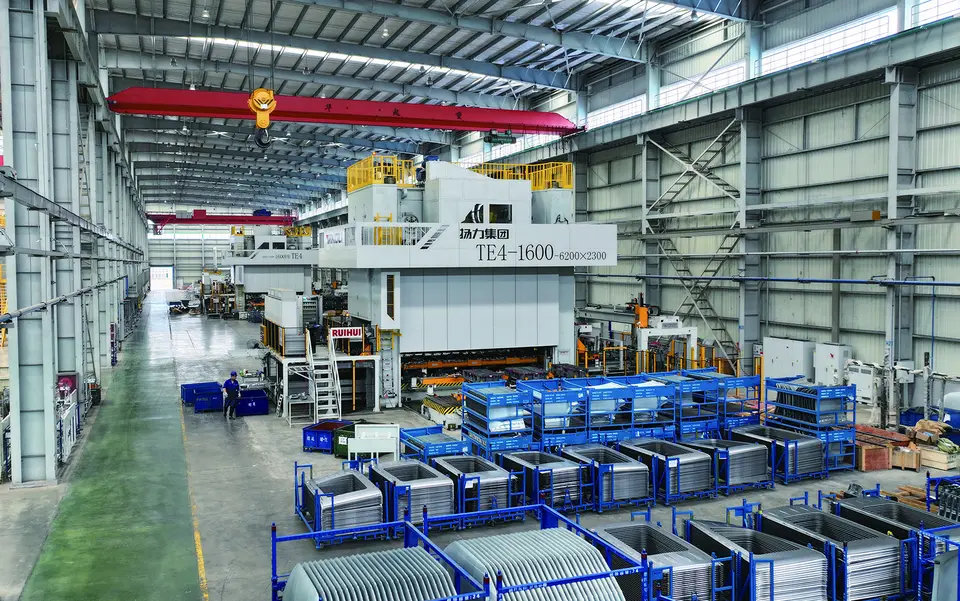
Multiple stations inside one press with coordinated transfer — high-volume parts without a multi-press line.
TE4 ↗Several presses linked by robots or transfer units, from 3690 t suspension-arm lines to 7900 t tandem press lines.
YANGLI lines from the March 2026 catalog and in customer production.
Share your drawing, material and production requirements. Start with a selected model or explore the equipment direction together.
Discuss your project ↗