Servo control with documented savings
Servo control technology saves 20% to 50% energy, keeps noise below 75 dB and limits temperature rise. Repeatable positioning accuracy is also documented for the servo variant.
20–50% energy saving
Bring servo control to hydraulic sheet drawing.
Open the source tables ↓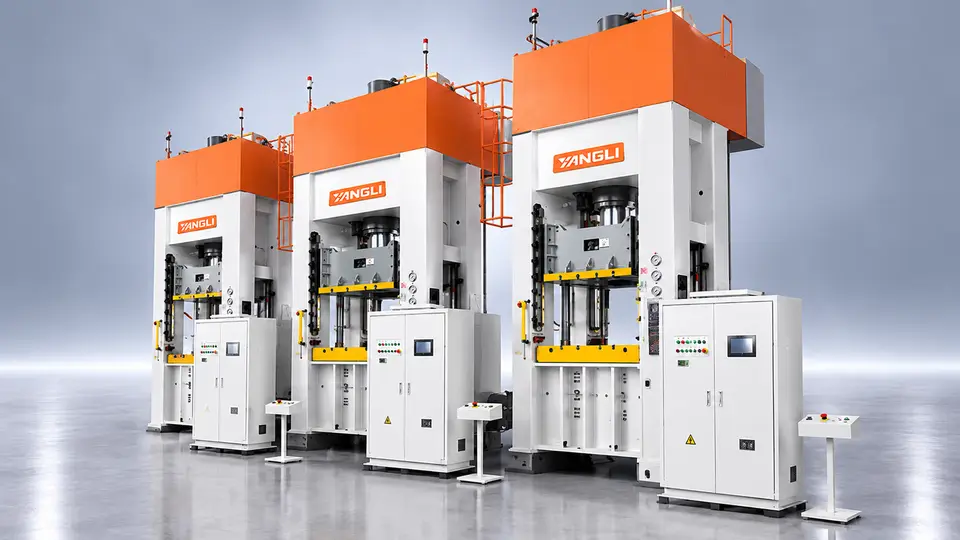
5 models. Select a model to open its source table.
Bring servo control to hydraulic sheet drawing.
Drawing, straightening and assembly across gantry, four-column and single-column platforms.
Use the source-specific technical tables below to check the model and configuration. The part, tooling envelope and transfer requirements are reviewed together before an equipment recommendation.
01Workpiece material and thickness
02Part geometry and tooling envelope
03Required operations and production target
04Feeding, transfer and automation interfaces
Documented in the series source materials.
Servo control technology saves 20% to 50% energy, keeps noise below 75 dB and limits temperature rise. Repeatable positioning accuracy is also documented for the servo variant.
20–50% energy savingEntire frame structure with four-corner eight-face guide rails for high guiding accuracy and strong offset-load resistance. The hydraulic system uses a cartridge valve integrated system with fewer connecting pipe lines and leak points.
Gantry framePLC and touch screen control allow multiple machining process requirements to be programmed in software. The interface provides directly perceived information and eases maintenance and inspection.
PLC + touch screenA hydraulic cushion under the bolster plate and sufficient ejector rod holes in the bolster enable three operating ranges: drawing, ejecting and no ejecting. Cushion force ranges from 800 to 2000 kN with stroke from 150 to 250 mm.
Three cushion modesPick a source edition, then a model. Tables from different documents are never combined. Request the original when cells are not yet aligned.
Source
Models in this table
Select a model. Drag it onto the Compare tray to pin it; drag a pinned model again to unpin.
Catalog reference. Confirm the ordered configuration with YANGLI.
Share your drawing, material and production requirements. Start with a selected model or explore the equipment direction together.
Discuss your project ↗